
Sweet Revenge for Tax Laws: FBR Shuts Down Punjab Sugar Mills
1/1/20261 min read
FBR Shuts Down Punjab Sugar Mills: Zero Tolerance for Tax Evasion
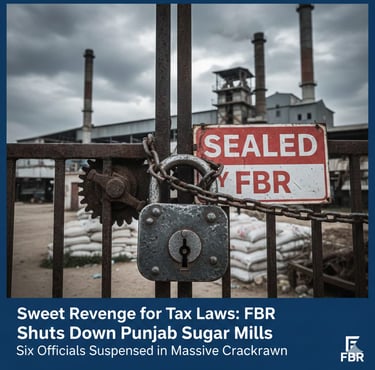
ISLAMABAD – In a major move against industrial tax non-compliance, the Federal Board of Revenue (FBR) has officially sealed two prominent sugar mills in Central Punjab. This enforcement action marks a significant escalation in the government’s "zero-tolerance" stance toward businesses flouting statutory tax obligations.
Why the Sugar Mills Were Sealed
The crackdown stems from serious violations of the Sales Tax Act, 1990. Specifically, the mills failed to adhere to Section 40C and the associated Sales Tax Rules of 2006. These regulations mandate strict monitoring and digital control mechanisms to ensure every bag of sugar produced is accounted for in the national revenue stream.
By bypassing these mandatory compliance checks, the mills allegedly undermined the "level playing field" intended for honest taxpayers. An FBR spokesperson confirmed that these decisive measures are necessary to safeguard government revenue from high-risk sectors like sugar production.
Internal Shake-up: 6 Officials Suspended
The FBR’s hammer didn't just fall on the mill owners; it also hit internal staff. Six FBR officials have been suspended immediately following reports of unauthorized absence from their posts.
These individuals were stationed at the mills under Section 40B to provide 24/7 oversight of production. However, during a surprise inspection by the Large Tax Office (LTO) Lahore, the monitoring teams were found missing from their duties.
Key Highlights of the Disciplinary Action:
Zero Compromise: The LTO Lahore has proposed full disciplinary proceedings against the staff.
Accountability: The move aims to prevent any collusion or "dereliction of duty" that could lead to tax leakage.
Integrity Standards: The FBR reiterated that professionalism across all field formations is non-negotiable.
The Path Forward: Voluntary vs. Forced Compliance
While the FBR continues to encourage voluntary tax compliance, this latest operation serves as a stern warning. For businesses involved in "willful non-compliance," the board has made it clear that they will face the full weight of the law, including mill closures and legal prosecution.
By tightening the noose on both non-compliant industries and negligent staff, the FBR is signaling a new era of transparency and strict enforcement in Pakistan’s tax landscape.