
Iranian Ambassador Hails Ties and Thanks Pakistan for Solidarity During Recent Conflict
1/1/20261 min read
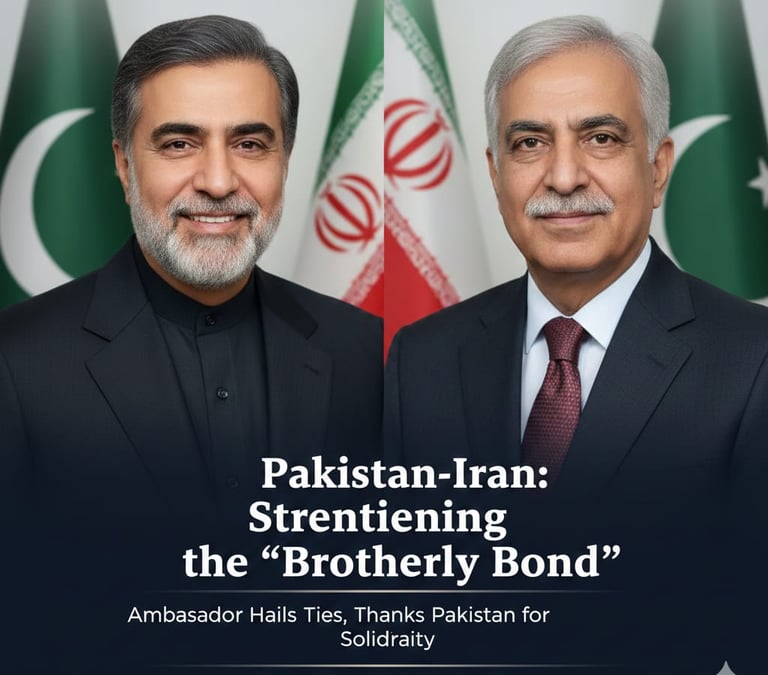
Pakistan and Iran Vow to Expand Ties Through Media and Cultural Exchange
ISLAMABAD – In a significant move to deepen the historic partnership between neighboring nations, the Iranian Ambassador to Pakistan, Reza Amiri Moghaddam, has called for a renewed focus on cultural diplomacy and media collaboration.
During a high-profile visit to the Pakistan Broadcasting Corporation (PBC) in Islamabad, Ambassador Moghaddam met with Director General Radio Pakistan, Saeed Ahmed Shaikh. The meeting centered on the "unshakeable bond" shared by the two countries—a connection rooted in centuries of shared religion, geography, and heritage.
Gratitude for Diplomatic Solidarity
A key highlight of the discussion was the Ambassador’s heartfelt appreciation for Pakistan’s steadfast support during the regional tensions in June. He specifically extended his gratitude to Prime Minister Shehbaz Sharif and the Pakistani government for their diplomatic solidarity during the 12-day Iran-Israel conflict.
"Pakistan has proven to be a true brotherly nation," Moghaddam noted, emphasizing that the support shown during such testing times has further solidified the mutual trust between Tehran and Islamabad.
Unlocking the Potential of Media Collaboration
Looking toward the future, the Ambassador highlighted the untapped potential within the media sectors of both countries. He argued that stronger "people-to-people" contacts are essential for long-term regional stability and economic benefit.
To turn these ideas into action, Ambassador Moghaddam officially invited Saeed Ahmed Shaikh to visit Iran. The proposed visit aims to:
Establish formal frameworks for bilateral media exchanges.
Enhance cultural broadcasting to share the rich history of both nations.
Consult on high-level strategies for joint media productions.
By leveraging the reach of Radio Pakistan and Iranian broadcasting networks, both leaders believe they can better showcase the shared values of their citizens and counter external narratives.